Defense4 Apr 20267 min read
The $66 Billion Sky: Why the Military Drone Market Is Exploding
From $18 billion today to a projected $66 billion by 2035 — the global military drone market is the fastest-growing segment in defence. Here's what's driving it, who's winning, and what comes next.
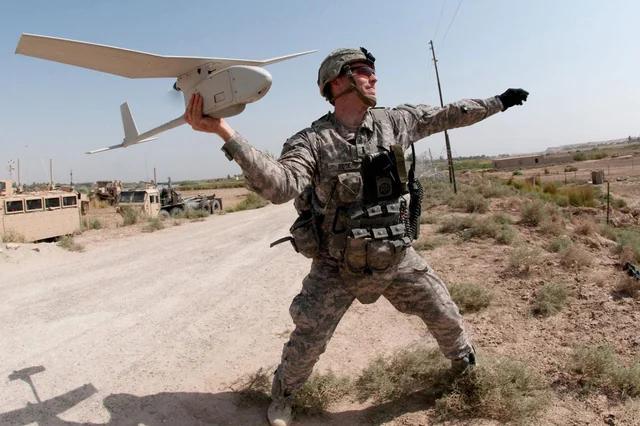
Something irreversible happened to warfare sometime around 2023. That was the year drone launches in Ukraine crossed the threshold of 10,000 per month. By 2025, that number had surged to 10,000 per day. In under three years, unmanned aerial systems went from a supplementary battlefield tool to the dominant instrument of tactical warfare — and the global defence industry is still scrambling to catch up.
What we are witnessing is not merely a technology trend. It is a structural transformation in how wars are fought, how militaries equip themselves, and where the defence dollars of the next decade will flow.
The Numbers
The military drone market was valued at approximately $18–20 billion in 2025. Across multiple analyst projections, the trajectory is unambiguous: the market is expected to more than double — and potentially triple — within the next decade.
Key forecasts:
| Forecast (Source) | 2026 Value | Projected Value | CAGR |
|---|---|---|---|
| Global Market Insights | $20.7B | $66.5B (2035) | 13.8% |
| Grand View Research | $47.4B | $98.2B (2033) | 8.9% |
| Fortune Business Insights | $20.8B | $30.9B (2034) | 6.8% |
| Research And Markets | $15.1B | $27.9B (2035) | 6.3% |
The wide range in projections reflects different methodologies and scope definitions — but every analyst agrees on the direction. The military drone market is growing faster than almost any other segment in global defence spending, and the pace is accelerating, not slowing.
To understand why, you need only look at what drones are doing on active battlefields: unmanned systems now account for more than 75% of all combat deaths in the Ukraine-Russia conflict. That is a statistic that has prompted a fundamental reappraisal of military doctrine from Washington to Warsaw to Beijing.
What Is Driving the Surge?
1. Conflict-Driven Demand
The war in Ukraine has been the most consequential battlefield laboratory in modern history. Every major military on earth has been watching. The lessons are stark: drones are cheap to produce in volume, difficult to defend against at scale, and capable of delivering tactical impact that previously required aircraft, artillery, or guided missiles.
The ongoing conflict between the United States and Iran has added a second, even more urgent datapoint. Iranian Shahed drones — costing as little as $35,000 each — have successfully targeted U.S. military installations, strained Gulf state air defences, and depleted Patriot missile stockpiles at a rate that exposed a critical vulnerability in Western air defence architecture. The result has been a flood of new procurement contracts and emergency spending on both offensive and defensive drone capabilities across the Middle East and beyond.
2. The AI Revolution in Unmanned Systems
Artificial intelligence is doing for drones what jet engines did for aircraft: unlocking capabilities that were previously impossible.
Modern military UAVs are increasingly able to navigate GPS-denied environments, identify and classify targets autonomously, conduct coordinated swarm operations with minimal human input, and adapt in real-time to shifting battlefield conditions. AI-enhanced systems are now present in approximately 45% of operational drone units, according to recent industry analysis. The pace of integration is accelerating rapidly.
The U.S. Replicator Initiative — targeting the mass deployment of autonomous drone fleets — and the Air Force's Collaborative Combat Aircraft (CCA) programme are both built around the premise that AI-enabled autonomy is the defining military technology of the coming decade. For the CCA programme alone, the Air Force is expected to make a critical production decision in 2026 between Anduril and General Atomics for drone wingmen designed to accompany F-22s and F-35s into combat.
3. Defence Modernisation Across Every Region
The surge is not confined to a single country or alliance.
NATO & Europe: Member nations collectively exceeded $1.3 trillion in defence spending in 2023, with unmanned aerial systems among the fastest-growing expenditure categories. Germany, the UK, and France are all investing heavily in indigenous UAV development. Russia's actions have pushed Eastern European NATO members to dramatically accelerate drone procurement. The UK alone is targeting 2,000 interceptor drones per month in joint production with Ukraine.
Indo-Pacific: The Asia-Pacific military drone market is forecast to grow at the highest regional CAGR of 14.7% through 2035, driven by rising tensions around Taiwan, China's extensive domestic UAV programme, and rapid military modernisation across India, Australia, South Korea, Japan, and Singapore.
Middle East: The explosion of drone warfare — from Houthi attacks on shipping to Iran's Shahed campaigns against Gulf states — has created an urgent, well-funded market for both offensive and counter-drone capabilities. Gulf states that have been struck by drones are spending aggressively on detection, interception, and offensive platforms.
The Critical Shift: Cheap, Attritable Drones
One of the most important structural trends reshaping the market is the deliberate move away from expensive, exquisite platforms toward cheaper, disposable systems designed to be produced and expended at scale.
For decades, the dominant paradigm was to build the best possible system regardless of cost. The RQ-4 Global Hawk, the MQ-9 Reaper — extraordinarily capable aircraft, but also expensive, slow to procure, and irreplaceable. The Ukraine conflict exposed the limits of this model under high-intensity conditions. When you are launching 10,000 drones a day, the economics of high-unit-cost systems collapse entirely.
This insight has fundamentally shifted procurement priorities:
- The U.S. Air Force CCA programme is explicitly designed around "affordable mass" — drone wingmen cheap enough to lose in combat without a strategic setback
- DARPA and multiple contractors are racing to develop one-way attack drones and loitering munitions at price points that make high-volume deployment viable
- Ukraine's drone manufacturers are designing, putting into production, and getting new models into combat in cycles measured in weeks — a tempo that traditional procurement cannot match
Technologies to Watch
Loitering Munitions — sometimes called "kamikaze drones" — are among the fastest-growing categories. These patrol an area autonomously, identify a target, and strike by diving into it. The U.S. Army's recent $17M procurement of AeroVironment's Red Dragon — a 400+ km range fully autonomous loitering munition — is a clear signal of where military investment is flowing.
Drone Swarms — coordinating dozens or hundreds of low-cost drones to overwhelm a target or air defence system — are moving from research into operational deployment. Approximately 35% of new drone development programmes globally are now incorporating swarm technology.
Counter-UAV (C-UAS) Systems are growing in direct proportion to offensive drone capabilities. Every drone that enters service creates demand for systems to defeat it — radar detection, electronic warfare, directed energy weapons (lasers, microwave systems), and kinetic interceptors. FEMA's $250 million grant to U.S. states ahead of the 2026 FIFA World Cup for counter-drone protection illustrates how the C-UAS challenge has expanded well beyond military contexts into civilian security.
Manned-Unmanned Teaming (MUM-T) is perhaps the most strategically significant emerging capability. In November 2025, an F-22 pilot successfully controlled a General Atomics drone from the cockpit using a tablet. This is not a demonstration — it is a preview of how air forces will fight within a decade.
Who's Winning?
North America currently dominates, holding approximately 40–50% of global military drone contracts, anchored by U.S. DoD procurement exceeding $1.8 billion in drone-related spending in FY2024. Key players include AeroVironment, General Atomics, Anduril, L3Harris, and Shield AI.
But the competitive landscape is broadening rapidly. Israeli manufacturers (Elbit, IAI, Aeronautics) continue to benefit from decades of combat-driven development experience. Turkey's Baykar has become a major exporter to Middle Eastern and African markets. China's domestic drone programme is extensive and growing. And Ukraine — almost entirely absent from the global defence market two years ago — has emerged as one of the most innovative and battle-tested drone manufacturers on earth.
The private sector is paying close attention. Venture capital flows into defence drone technology have surged, with major funding rounds for companies like Anduril, Shield AI, and dozens of smaller startups. The companies building the platforms, autonomy software, and communications architecture for the battlefields of the 2030s are being funded right now.
Conclusion
The global military drone market is not a bubble. It is a structural shift in the nature of warfare backed by record defence budgets, active conflicts validating drone capability in real time, and accelerating AI development unlocking capabilities that were science fiction a decade ago.
The sky above the battlefield looks fundamentally different than it did five years ago. Nations that move quickly — in doctrine, procurement, and industrial capacity — are gaining a compounding advantage. Those that cling to legacy assumptions about what air power looks like are, as the events of the past three years have demonstrated, due for a rude awakening.
The $66 billion sky is being built right now. The question is who is building it.
Key Takeaways
- Military drone market expected to grow from ~$20B in 2026 to $66B+ by 2035
- Ukraine & Iran conflicts are the primary demand accelerators
- AI integration is now present in ~45% of operational drone units
- Asia-Pacific is the fastest-growing region at 14.7% CAGR
- Cheap, attritable "affordable mass" drones are replacing expensive exquisite platforms as the dominant procurement logic
Sources: Global Market Insights, Grand View Research, ResearchAndMarkets, Breaking Defense, DefenseScoop, SOF News, Fortune Business Insights
Military DronesUAV MarketDefence SpendingAI in DefenceAutonomous SystemsNATODefence TechnologyDrone SwarmsIndo-Pacific
Enjoyed this read?
Get articles like this delivered weekly — technical deep dives, industry news, and drone insights from India.