Industry4 Apr 20264 min read
India's Drone Export Ambitions: Can We Compete Globally?
India wants to sell drones to the world. The ambition is real. But so are the obstacles.
There's a question that keeps coming up in every serious drone industry conversation in India right now — in boardrooms, in policy meetings, and in engineering labs that are quietly working on platforms nobody has announced yet.
Can India actually export drones at scale?
The official answer is enthusiastic. The honest answer is more complicated.
The Ambition Is Real
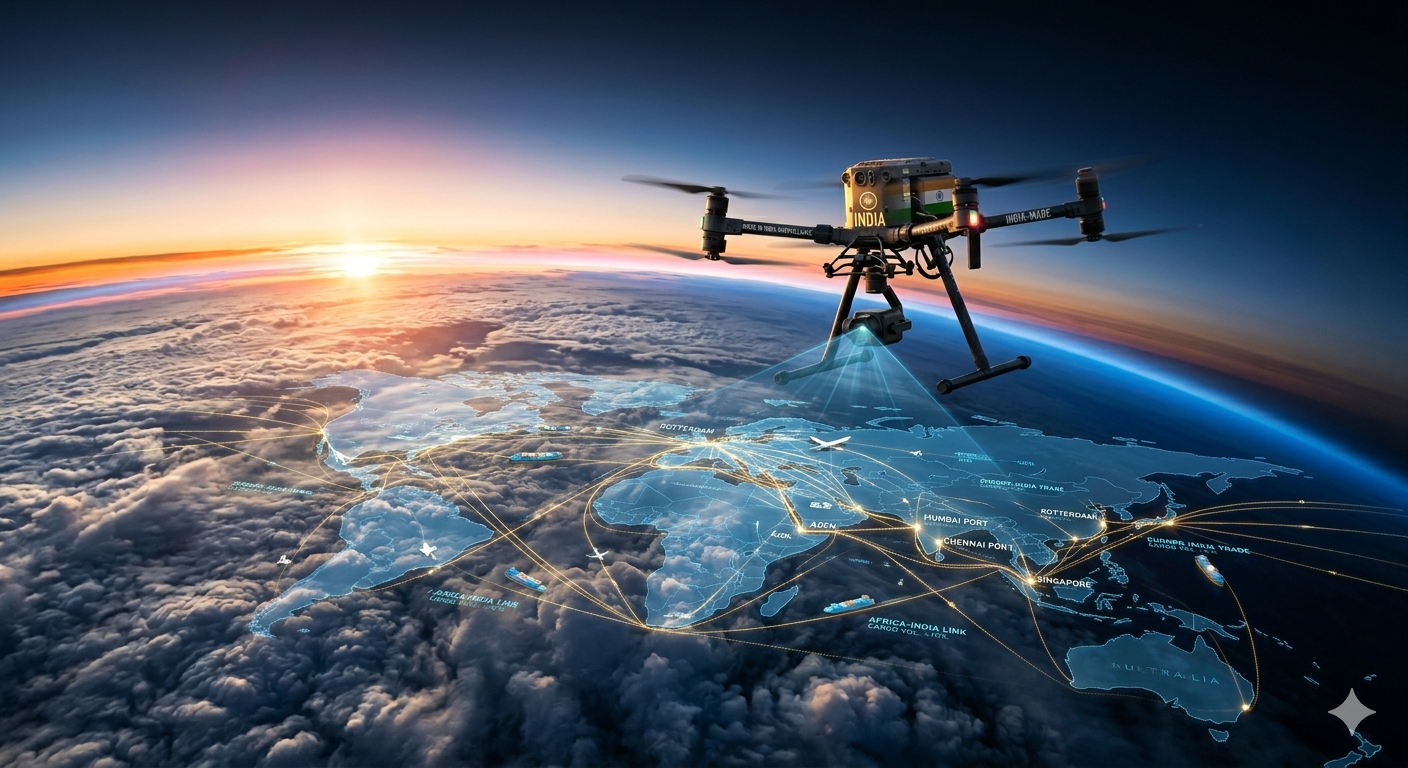
India has set an aggressive target — $1 billion in drone exports by 2030. That number comes from the government's own policy documents and has been repeated often enough that it's become a kind of industry mantra.
The logic behind it isn't unreasonable. India has a massive engineering talent pool. Labor costs are competitive. The PLI scheme has seeded domestic manufacturing capacity. And crucially — a global market that's deeply uncomfortable with Chinese drone dominance is actively looking for alternatives.
That last point matters more than people discuss openly. After multiple governments banned or restricted DJI equipment over data security concerns — the US, UK, Australia, parts of Europe — a real procurement gap opened up. Somebody has to fill it.
India wants that somebody to be Indian companies.
Where Indian Drones Can Actually Compete
Not every segment of the global drone market is equally accessible. Indian companies need to be honest about where they have a real shot.
Defense and surveillance exports are the most credible near-term opportunity. India has existing defense relationships across Southeast Asia, Africa, and the Middle East. Countries in these regions need capable, affordable surveillance platforms that don't come with Chinese data concerns or American export restriction complexity. IdeaForge's SWITCH platform has already drawn interest from several foreign militaries.
Agri-drone services are a second genuine opportunity — particularly in markets like Southeast Asia, Sub-Saharan Africa, and South America where smallholder farming economics look similar to India's. The operational playbook Indian companies have developed is directly transferable.
Survey and mapping platforms targeted at emerging markets represent a third lane — countries digitizing land records, building infrastructure, or managing natural resources where cost-effective drone surveys can replace expensive traditional methods.
The Honest Obstacles
Here's where the conversation usually gets uncomfortable.
DJI isn't going anywhere. Despite bans and restrictions in Western markets, DJI still dominates global civilian drone sales. Their cost structure, supply chain integration, and product depth are genuinely difficult to match. Indian companies competing with DJI on consumer or prosumer platforms are fighting the wrong battle.
Export-grade certification is hard. Selling a drone to a foreign military or government requires navigating their certification and qualification processes — which are often longer and more demanding than India's own. A platform that's DGCA-approved isn't automatically trusted by a Southeast Asian defense ministry.
After-sales infrastructure doesn't exist yet. A drone sale isn't just a transaction — it's a long-term service relationship. Spare parts, maintenance, software updates, pilot training. Indian companies have built this infrastructure domestically. Building it internationally is a different problem entirely.
Brand recognition is near zero. Outside India, almost nobody in the drone industry has heard of IdeaForge or Garuda. Building international brand credibility takes years of presence at global trade shows, international media coverage, and visible operational deployments in foreign markets.
The Countries Watching India Closely
Despite the obstacles, there are real conversations happening.
Nepal, Sri Lanka, and Bangladesh — immediate neighborhood markets with existing defense and trade relationships — are the most natural first export destinations. Low friction, shared regulatory familiarity, and existing procurement channels.
Several African governments actively exploring drone-based border surveillance and agricultural applications have reached out to Indian manufacturers. The price point of Indian platforms versus Western alternatives is a genuine conversation opener.
The Middle East — particularly UAE and Saudi Arabia — has become a hub for drone innovation and procurement. Indian companies have begun showing up at Dubai Airshow and UMEX with more seriousness than in previous years.
What Needs to Happen
The path from ambition to actual export revenue requires a few things that aren't fully in place yet.
Indian companies need to stop competing on specs and start competing on outcomes — what the platform delivers operationally, not what the datasheet says. International buyers don't care about motor KV ratings. They care about mission success rates.
The government needs to streamline defense export clearances. Right now, the process of getting approval to export defense-related drone technology is slow and opaque. Faster clearance timelines would let Indian companies move at the speed of procurement conversations rather than bureaucratic cycles.
And the industry needs a few visible international wins — actual operational deployments in foreign markets that generate case studies, references, and credibility. One real deployment is worth a hundred trade show appearances.
The Bottom Line
India's drone export ambition is legitimate. The market opportunity is real. The timing — with global anxiety about Chinese technology creating genuine procurement alternatives — is better than it has ever been.
But ambition and timing aren't enough. The companies that will actually generate export revenue are the ones investing now in certification readiness, international service infrastructure, and the slow unglamorous work of building foreign relationships.
The $1 billion target by 2030 is achievable. It just won't happen automatically.
Drone ExportMake in IndiaGlobal UAV MarketIndian Aerospace
Enjoyed this read?
Get articles like this delivered weekly — technical deep dives, industry news, and drone insights from India.
More in Industry
Industry6 MIN READ
The Rise of Agri-Drones: How Indian Farmers Are Adopting UAV Technology
Across Punjab's wheat fields, Andhra's cotton rows, and Maharashtra's sugarcane belts, something is changing. The drone isn't a gadget anymore — it's becoming farm infrastructure.
By The Drone Post

Industry6 MIN READ
How India's PLI Scheme Is Reshaping the Drone Manufacturing Landscape
The Production Linked Incentive scheme didn't just put money into drone companies — it forced the entire ecosystem to grow up. Here's what changed, what's working, and what still needs fixing.
By The Drone Post
Industry6 MIN READ
UAV Startups to Watch in India in 2026
India's drone industry has moved past the hype. These are the companies quietly building the infrastructure, the platforms, and the hardware that will define the next decade of unmanned aviation.
By The Drone Post