Industry2 Apr 20264 min read
UAVs in 2026: From Pilot Projects to Operational Infrastructure
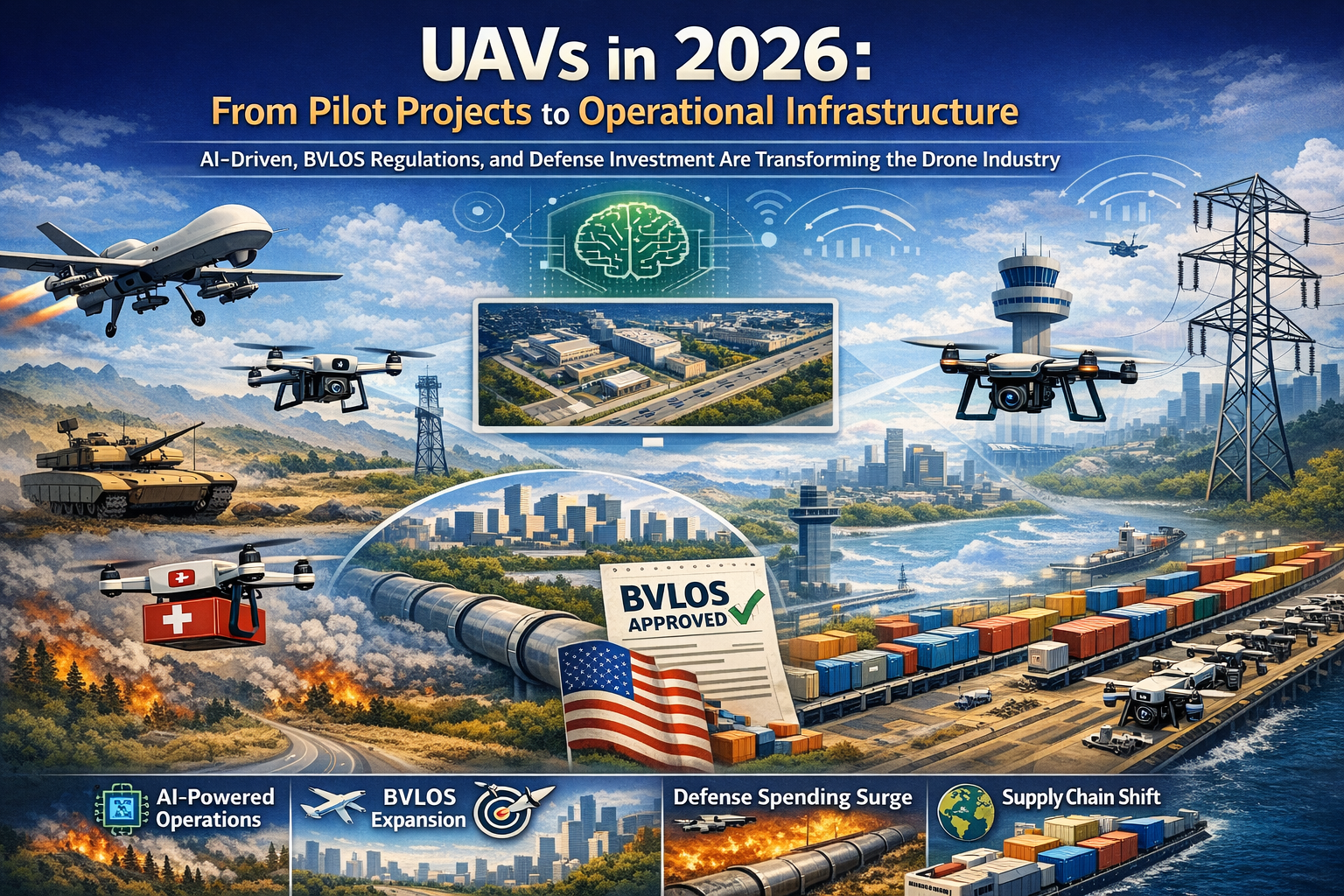
Drones have crossed a threshold. Backed by AI, loosening regulations, and billions in defense spending, the unmanned aerial vehicle industry is no longer experimenting — it's deploying.
The unmanned aerial vehicle industry has entered a new phase — one defined less by experimentation and more by real-world deployment at scale. What was once a niche technology is rapidly becoming essential infrastructure across defense, logistics, agriculture, and public safety.
AI is the new cockpit
The most consequential shift in UAVs isn't in airframes or batteries — it's intelligence. Modern drones are increasingly capable of navigating complex environments, analyzing data in real time, and completing missions with minimal human intervention. After proving their value by saving companies thousands of hours in labor, AI platforms are expected to see even broader adoption across the industry in 2026, with applications spanning UAS traffic control, wildfire mitigation, and large-scale infrastructure inspection.
"AI will play an outsized role in the development of UAS traffic control systems and wildfire mitigation — among a myriad of other applications."
The regulatory frontier: BVLOS
The biggest operational constraint for commercial drones — requiring pilots to keep aircraft within line of sight — is finally being dismantled. The FAA's final rule on Beyond Visual Line of Sight (BVLOS) operations is expected in 2026, a milestone that would unlock long-distance flights for sectors like medical delivery, pipeline inspection, and emergency response. Meanwhile, the EU is expanding its U-space air traffic management system, and Asia is fast-tracking autonomous operations approvals.
Defense pours in — and reshapes the market
The U.S. Army has announced plans to purchase at least one million drones over the next two to three years, up from roughly 50,000 annually today. A dedicated $1 billion "Drone Dominance" program is targeting one-way attack drones at a unit cost as low as $2,300 — a signal that volume and affordability now matter as much as capability. These defense contracts are expected to produce spillover benefits for commercial manufacturers through lower component costs and expanded production infrastructure.
Geopolitics reshapes supply chains
While the U.S. has historically led in military drone development, the global commercial market is dominated by lower-cost platforms, many produced by Chinese manufacturers. In response, the U.S. government is pushing for a self-sufficient domestic drone industry through executive action — but experts caution that building out domestic manufacturing capacity will take years, not months. Supply chain resilience, not just airframe origin, is becoming the defining security question for operators and procurement officers alike.
The bottom line
UAVs in 2026 are no longer a future technology — they are an operational one. The convergence of AI, regulatory progress, and massive defense investment means the industry is transitioning from pilots to pipelines. The question is no longer if drones transform critical industries, but how fast the infrastructure to support them can be built.
UAVDefenceBVLOSAI AutonomyConsumer DronesRegulation
Enjoyed this read?
Get articles like this delivered weekly — technical deep dives, industry news, and drone insights from India.
More in Industry
Industry4 MIN READ
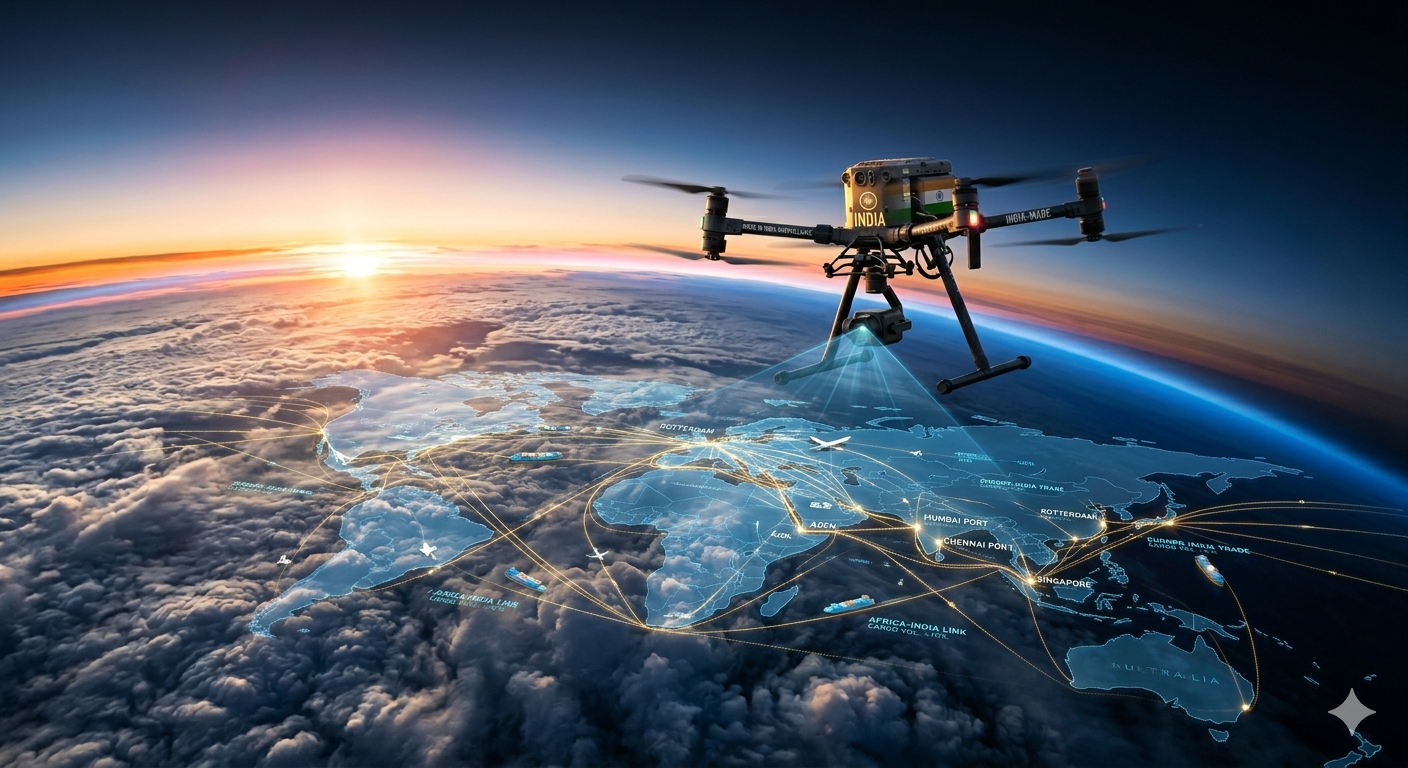
India's Drone Export Ambitions: Can We Compete Globally?
India wants to sell drones to the world. The ambition is real. But so are the obstacles.
By The Drone Post
Industry6 MIN READ
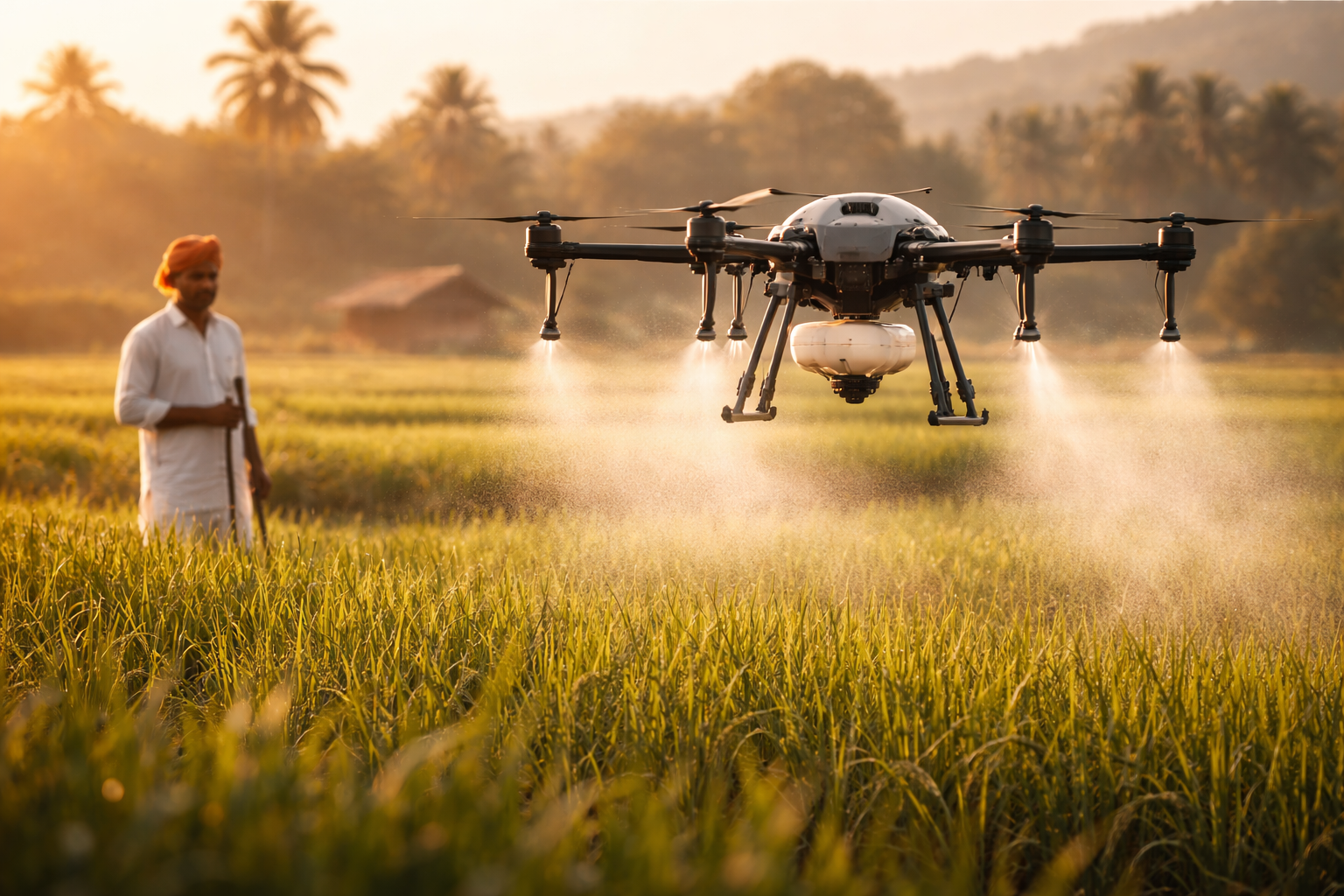
The Rise of Agri-Drones: How Indian Farmers Are Adopting UAV Technology
Across Punjab's wheat fields, Andhra's cotton rows, and Maharashtra's sugarcane belts, something is changing. The drone isn't a gadget anymore — it's becoming farm infrastructure.
By The Drone Post
Industry6 MIN READ
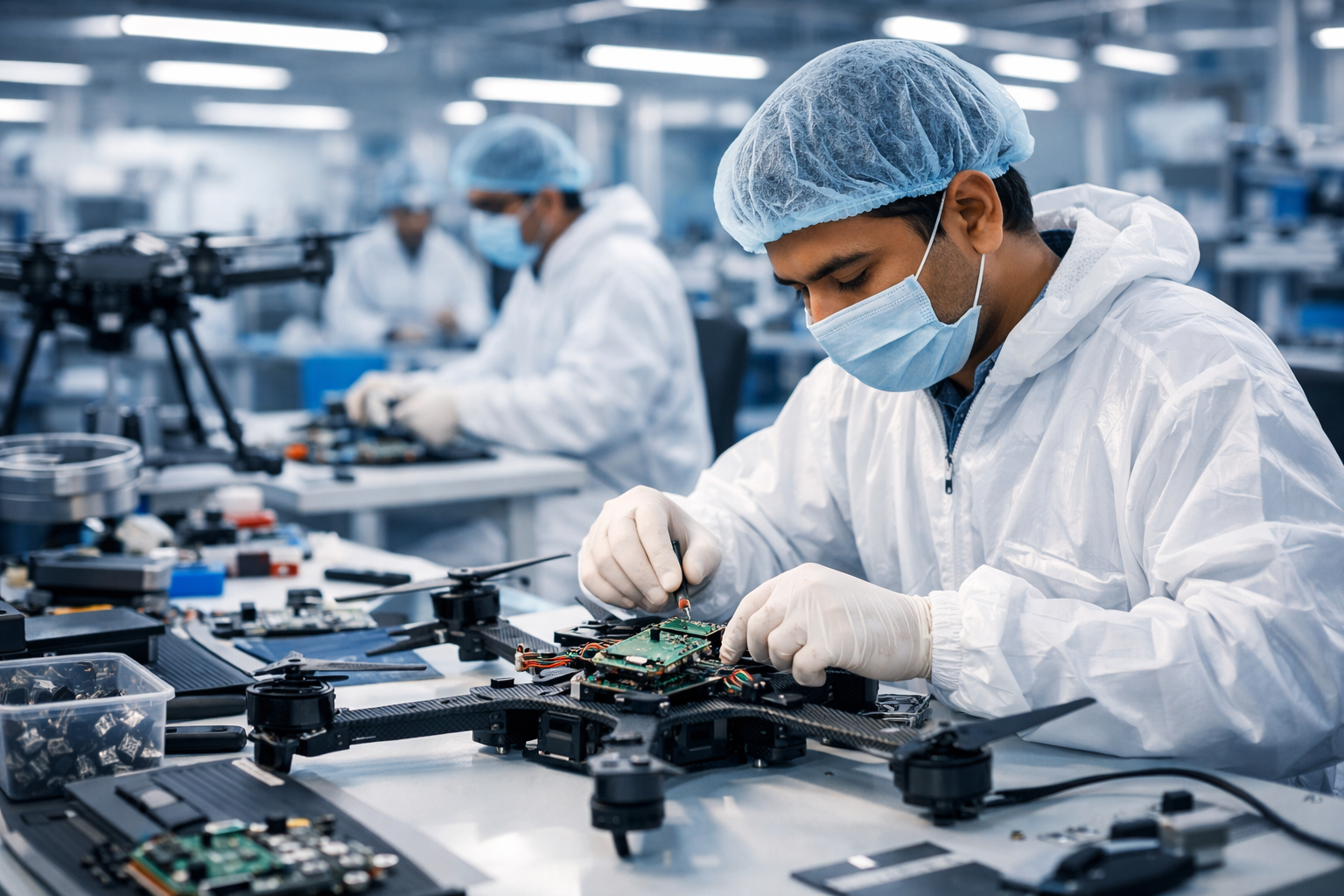
How India's PLI Scheme Is Reshaping the Drone Manufacturing Landscape
The Production Linked Incentive scheme didn't just put money into drone companies — it forced the entire ecosystem to grow up. Here's what changed, what's working, and what still needs fixing.
By The Drone Post